August 07, 2026 / by Aerial Edge / In circus-training
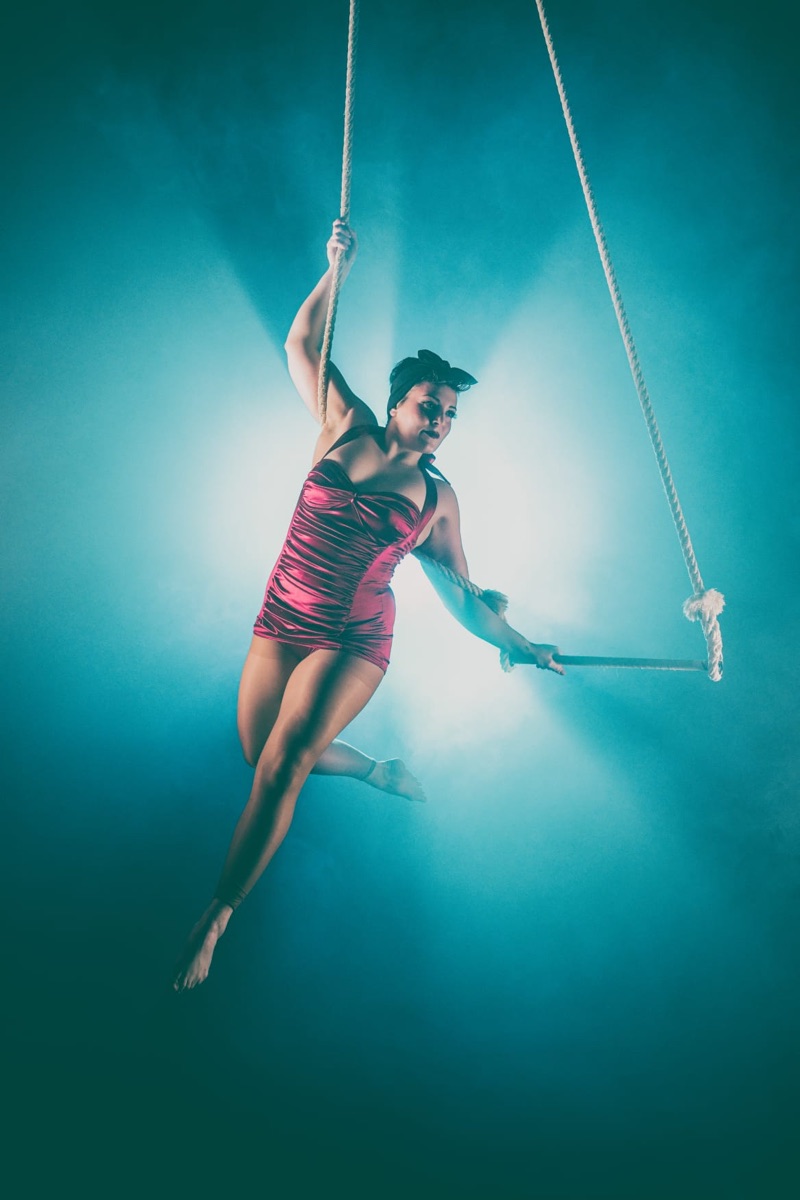
Dance trapeze, static trapeze, and why Andrea keeps coming back to the bar
Andrea had already done a fair amount of aerial before she ever set foot in Aerial Edge. Dance trapeze, static trapeze technique, hammock, the occasional bit of silks and rope – she’d tried most of it. What she hadn’t done was train any of it in a focused way day after day, in one place, for long enough to specialise.
That changed on the PDC, Aerial Edge’s one-year professional course (now delivered in two six-month blocks). Like everyone who starts it, she spent the first section training broadly across every discipline on offer, whether or not it was something she planned to perform. “It’s good to have an experience with everything,” she says, “even the classes you’re not necessarily going to use.” She’s kept up plenty of that range since. But if you ask her which apparatus she never gets tired of, the answer doesn’t change: trapeze.
Why trapeze, out of everything
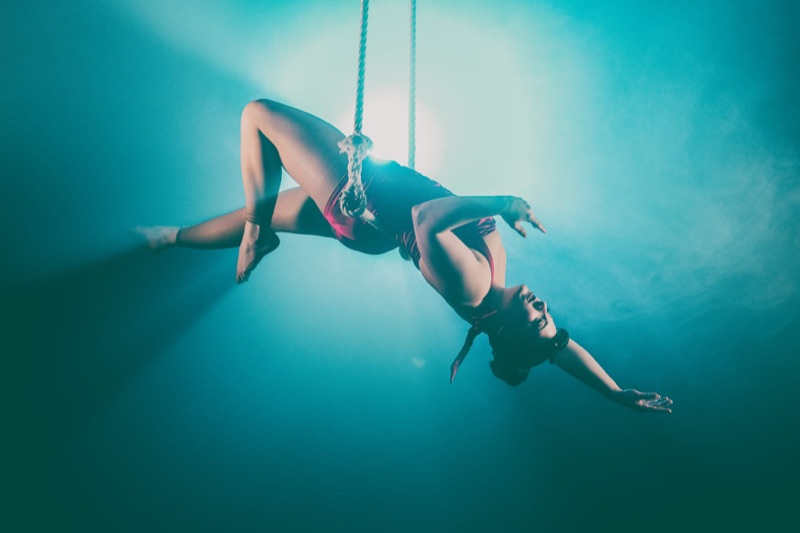
Part of it is simple physics. Rope and silks work through a small set of reset positions that you can cycle through as you move – catcher, a hip-based hold, and a dead hang among them. “Trapeze is different,” she explains. “You’re more likely to end up somewhere that’s actually useful for getting somewhere else next.”
She loves how the apparatus moves with her rather than making her move around it, and she can change her grip or shape to suit whatever comes next, rather than the apparatus dictating it.
Hoop doesn’t do that, she says, and neither does Chinese pole. “Hoop won’t move with you. It’s quite heavy, you need to be the one moving around it.”
Trapeze translates well to other apparatus too. Andrea uses it a lot when working on hammock, which she describes as even softer than trapeze to move through. A handstand is easier on trapeze than on hammock, because the bar’s already there to push against. On hammock you have to hold the tension yourself to make one.
There’s a performance instinct behind the preference as well as a technical one. Andrea describes herself as more the actory type of aerialist than an athletic one – drawn to expressive movement over stacking tricks.
She reckons that’s a harder thing to find done well now that aerial training is more widely available than it’s ever been, particularly on silks, where a lot of very good athletes rack up a long line of tricks, which leans more into awe than expression. Trapeze, for Andrea, leaves more room for the latter.
It also comes with one small practical perk verticals don’t offer: “You can wear shoes or heels on trapeze. You can’t do that in silks.”
Dance trapeze versus static trapeze
Andrea’s own training on the pro course is dance trapeze, which is a different discipline from the static trapeze taught in Aerial Edge’s weekly classes. Dance trapeze usually rigs on a single point rather than two, which matters because the ropes meet at the top, and you can then spin on a swivel.
The two look different in the air too. “The nice thing to watch on dance trapeze is that there’s a shape slowly evolving as it spins,” she says. “Static trapeze is more about hitting a position.”
Spin technique specifically was new to her when she arrived at Aerial Edge. “I trained the tricks before, but I’d never trained spin,” she says. Once she had it, it opened up a different way of moving around the ropes and the bar altogether – something she’s still finding new ways to use.
Teaching, performing, and one bad afternoon with a pole
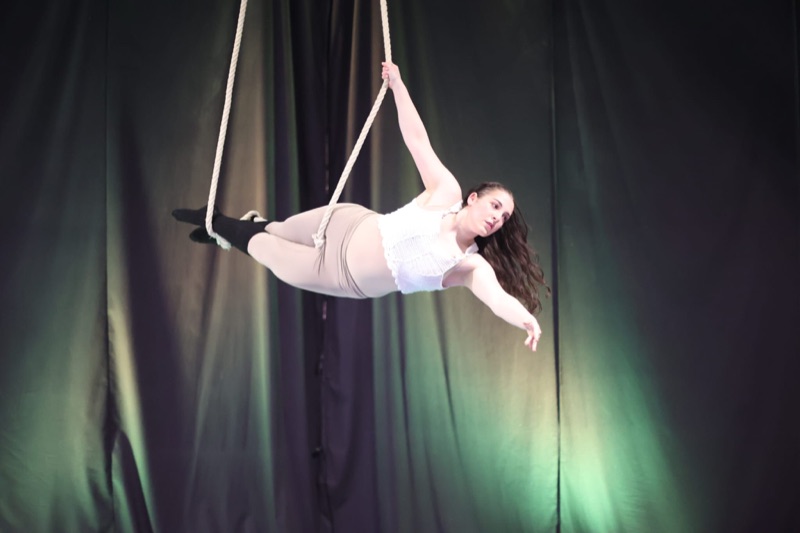
Performance is where Andrea’s focus sits now, though she’s taught kids for three years and only paused that to train full time on the PDC until June this year.
Her performance in the Commonwealth Games show at the end of July was in jeopardy when a training session went wrong as she collided with a pole – an apparatus that, as she points out, doesn’t move at all. She’d moved around it in a way she wasn’t supposed to, and that meant that her end-of-course showreel shoot had to be postponed. The show went ahead and Andrea’s theatrical performance was met with wild applause. In the end, she chose aerial hammock, which just goes to show how versatile you can be after a full-time course.
Where to try trapeze
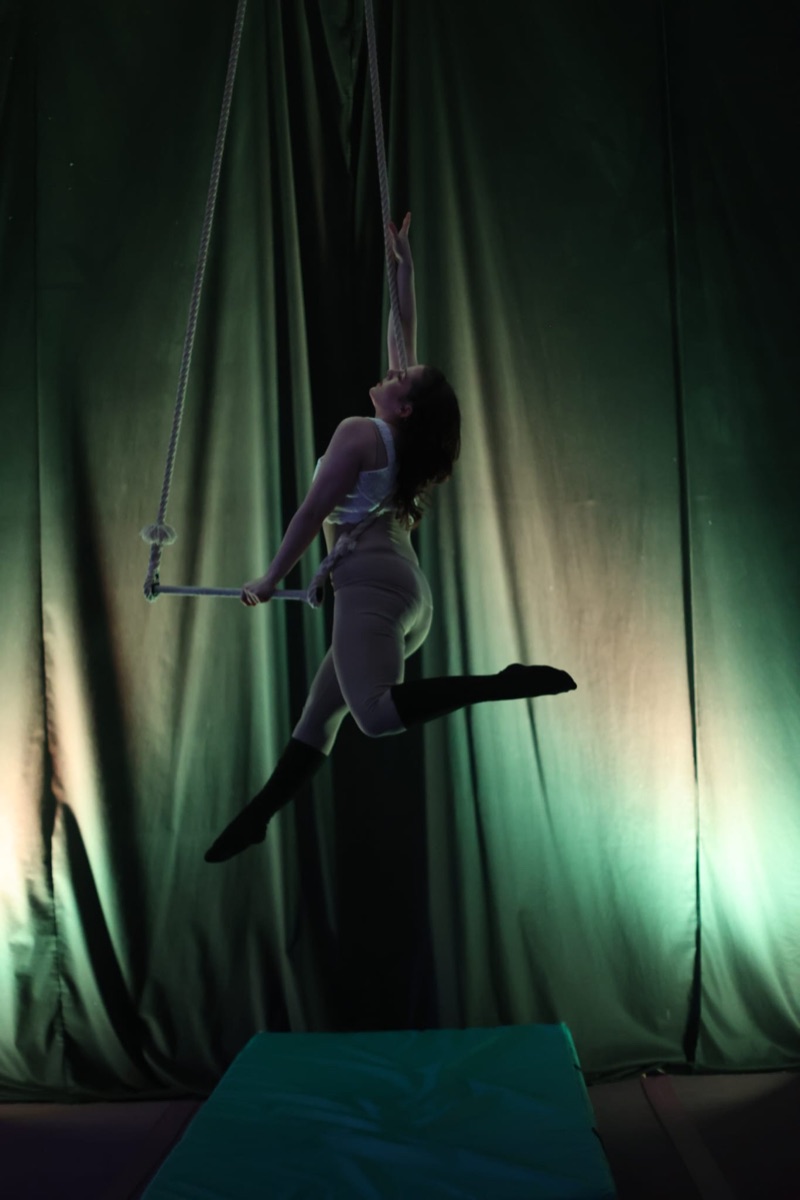
You don’t need a year on the PDC to find out what she’s talking about. Static trapeze runs weekly at Aerial Edge – Wednesdays with Freya, Sundays with Mark, doubles work optional on Sundays. Nobody’s asking you to hit Andrea’s level on day one. The apparatus does the same thing for you either way: it moves with you, not the other way round.